About White Button Mushroom


1. Mushrooms are edible fungus and is being used as food since time immemorial. More than 2000 species of mushrooms are available in nature, but only about 25 types are edible and widely accepted as food. Mushrooms are considered as delicious food with high nutritional and functional value, and they are also accepted as nutraceutical foods.
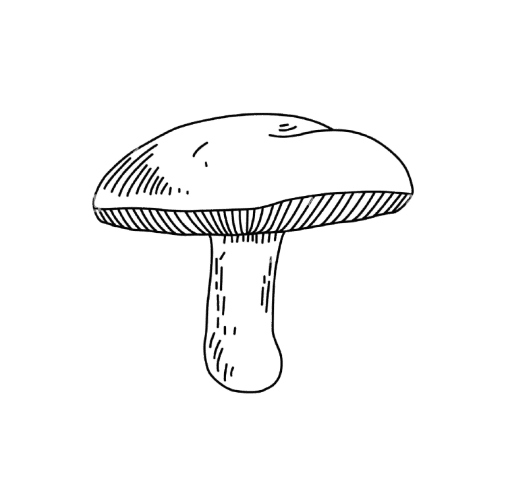
2. Out of these 25 edible mushrooms, Button Mushroom (Botanical Name: Agaricus Bisporus) is the most cultivated mushroom in the world. There are two varieties in the Button Mushroom, one is white and the other one is brown.Our company is involved in cultivation of edible white button mushroom meant for human consumption. The cultivation method of every mushroom is differing from each other. Button mushroom is very unique in its cultivation method and growing process and one of the mushrooms grown on soil.
3. The Button Mushroom is a good source of food with sufficient nutrition as available in plants, fruits and vegetables. The usage of Button Mushroom started in the year 1650 in Paris. Initially the Mushrooms were collected from compost mixed soils and also it was grown in caves. Later for about 160 years, White Button Mushroom was grown in open fields. Button mushroom normally grows spontaneously and naturally in certain districts of Andhra Pradesh on Ant Hills, Western Ghats, Silent valley region during rainy seasons.

4. With the advancement in food technology, the science has revealed that the white button mushroom has the following rich qualities:
- Richest source of protein
- Contains vitamins like B, C and D
- Contains minerals like iron, magnesium and potassium
- Contains low fat
- Contains zero cholesterol
- Contains zero sodium
- Contains selenium which works as an antioxidant
5. In India, the first successful experimental cultivation of Button Mushroom was initiated by National Mushroom Research Centre presently named as Directorate of Mushroom Research, ICAR, Solan (Himachal Pradesh), Government of India in 1961. Later on, the cultivation of edible mushrooms gradually became popular in different parts of our country.
6. With the new inventions about the quality of vitamins and minerals available in white button mushroom, the requirement for human consumption had increased manifold over a period time.

7. In the ancient times, people were satisfied with the spontaneous and seasonal growth. Button mushroom obtained from mountains or hilly regions or during rainy seasons were not able to cater the needs of growing population. As the demand has increased, it became necessary to invent new methods of production so as to increase the yield.
8. Accordingly, new methods and techniques were adopted worldwide for continuous cultivation of white button mushrooms under environment controlled condition using specially cultured soil which is prepared through agricultural operations. It is important to note that the soil on which mushroom was grown in open fields/ mountains is almost identical to that of the soil used in environmental controlled conditions, on which the mushroom is grown. The usage of environmental condition would not alter the basic nature of quality and characteristics of the button mushroom.
9. Thus, in order to meet the growing demand of the edible mushroom, it is important that environment controlled condition is used so as to increase the yield of such mushrooms.

Why Environmental Controlled Rooms are used?
- Drastically reduce agricultural land use (vertical use of land)
- Availability of superior quality mushrooms
- Free from diseases
- Free from pests and insecticides
- Save water
- Round-the-year availability of harvest
- Makes cultivation possible independent of season and weather conditions
- Limits carbon dioxide and puts less strain on the climate
10. With the new inventions about the quality of vitamins and minerals available in white button mushroom, the requirement for human consumption had increased manifold over a period time.
Asparagus officinalis is native to most of Europe, northern Africa and western Asia, and is widely cultivated as a vegetable crop.
Cultivation Methodology


The activity of cultivating edible white button mushrooms is no different from cultivating any other agricultural/vegetable produce which are explained in the following steps:
The raw materials required are: Paddy straw or Wheat straw, Chicken Manure, Urea, Ammonium Sulphate, Gypsum. The composition may vary from farm to farm, region to region depends upon climatic conditions. The cultivation of button mushroom is divided into two parts. One is Outdoor preparation of raw materials and the other one is Indoor growing.
A. Outdoor Preparation:
There two stages involved in raw materials preparation.
Stage-I: Compost Preparation
Wet Paddy Straw is added with ingredients like Chicken manure, Gypsum and Ammonium Sulphate compound. Then by adding sufficient water, thorough mixing is done. Then, this mixture is transferred to bunkers for further decomposition under aeration. The temperature of 78 degrees centigrade is maintained for this process. Approximately 6-7 days is required for this process.
Stage-II: Pasteurisation and Conditioning of Compost
After five days, this compost (above said mixture) is transferred from bunkers to tunnels for pasteurization and conditioning. During Pasteurisation, the compost is subjected to 56–60 degrees centigrade for eight hours to destroy the pathogenic organisms. After eight hours in the pasteurisation stage, cooling is given to reduce the temperature. During the conditioning, the compost temperature is maintained between 46-49 degrees centigrade. Approximately 6 to 7 days is required to receive good compost. What we prepare is called Phase II compost. Outdoor preparation requires 12- 14 days.

B. Indoor Growing:
There are 5 stages involved in the growth of edible white button mushroom:
- Spawn run stage (12–13 days)
- Case run stage (6 days)
- Venting stage (2 days)
- Pinning stage (8 days)
- Harvesting stage (13–14 days)
B. Indoor Growing:
There are 5 stages involved in the growth of edible white button mushroom:
- Spawn run stage (12–13 days)
- Case run stage (6 days)
- Venting stage (2 days)
- Pinning stage (8 days)
- Harvesting stage (13–14 days)


Stage I – Spawn Run
The above prepared compost is transferred to growing rooms after mixing with SPAWN (seed) and placed in the shelves (Beds) or in the bags. This layer will be of about 200 mm thickness. The SPAWN run (i.e., spreading of SPAWN) takes about 12 to 13 days. This is done under controlled environment conditions in the growing rooms by maintaining the compost temperature up to 28 degrees centigrade.
Stage-II: Case Run stage/ Soil Application
After the SPAWN Run, the beds are cased with soil of about 50 mm thickness. The casing soil is prepared by mixing Coir Pith, Ball clay or any other clay materials and applied on beds. The casing soil acts as a water buffer. If necessary, sufficient micronutrients are also added in the casing soil. After application of the soil, the SPAWN (seed) will grow and spread in all directions. It may take 6 days.
Stages III & IV – Venting & Pinning
Stage-III: Venting
After this, venting is done by giving fresh Air, required Temperature, Carbon-Dioxide and moisture to SPAWN, upon which it starts forming Pins with Heads within the soil which were applied earlier.
Stage-IV: Pinning
After Venting, the pin heads will start forming and it means that the roots of the Mushroom are only grown in the middle and upper surface of the soil and the roots are up to a max of 20 to 30 mm in the soil bed. Pin heads will be fully grown in 8 days' time.

Stage V – Harvesting
All the grown pin heads are called as Mushrooms and this is harvested (Picking) in 2 flushes for 12 -13 days, which are sold for human consumption. Once harvest is completed, then the compost and the soil bed are cooked out and the growing area will be ready for next cycle. The total cultivation/ production cycle of the edible white button mushroom is 41-43 days.
In abroad, harvest will be done in three flushes also. It depends upon the compost used and the growing procedures. But in our country we do generally two flushes.

Packing and Sales
There were 2 different types of packing used for sale of mushroom, which are:
- Bulk packing
- Punnet box packing
In the Bulk packing, 5-10 kgs of mushroom could be packed and sold.
In the punnet box packing (200 gms), the boxes are covered either with routine polyethene covers or with breathable nano film. In the case of nano film packing, our company uses three specially designed packing machines imported from Italy. Further, the company has few refrigerated vehicles to transport the harvested mushroom to different parts of Tamil Nadu and neighbouring places in a stipulated time. Because of quality, good packing and timely delivery, our products fetch good rates in the market.
The shelf life of the Mushroom is 4-7 days if properly kept in 4 degrees centigrade.

Yield Status
Generally, the average annual yield of white button mushroom is calculated from the following standard procedure:
- The area of the compost spread on shelves in each racks in terms of sq.fts or sq. mts in a growing room (or)
- The total compost used in each bag in a growing room and
- The number of growing rooms or area that was used along with the number of cultivation cycle achieved in a year.
i.e.,
number of bags in each cycle X yield per bag (in Kgs) = Total yield/ cycle: [Annual yield = {(Total yield / cycle) X number of cycles in a year, (generally 7 cycles)}]
or
area used in each cycle (sq.ft or sq.mt) X yield per sq.ft or sq.mt = Total yield / cycle: [Annual yield = {(Total yield / cycle) X number of cycles in a year, (generally 7 cycles)}]
The international standard of the average yield is as follows:
- If it is a bag of 10 Kgs of compost, yield would be 1.9 to 2.1 Kgs of Mushroom/ cycle.
- In terms of area, 1 Sq ft of compost (10 kgs) yield would be 1.9 to 2.1 kgs of Mushroom/ Cycle and annual yield is around 15 Kgs.
- In case of 1 Sq mt compost (100 kgs) yield would be around 20.0 + Kgs mushroom/ cycle.
But Indian average yield would be in the ranges between 1.5 to 1.9 kg Mushroom/cycle.
Operations on White Button Mushroom

Operations performed – Outdoor
- Mixing of raw materials (paddy straw, chicken manure, ammonium sulphate, urea) with water
- Digging / Excavating the land to get clay soil
- Pulverizing / grinding the clay soil with Gypsum and Calcium Carbonate
- Adding coir pith with soil
- Usage of fungicide / pesticide
- Mixing of seed / spawn with compost

Operations performed – Indoor
- Ruffling the soil
- Scratching the soil
- Levelling the soil
- Watering the soil
- Usage of fungicide / pesticide
- Usage of bactericide
- Weeding
- Disease control
- Pruning
- De-clustering
- Removing undesirable undergrowth
- Plucking / Harvesting
So we can conclude that Mushroom is an agricultural product raised from land.